Skin changes were my first sign of perimenopause. Here’s what helped.
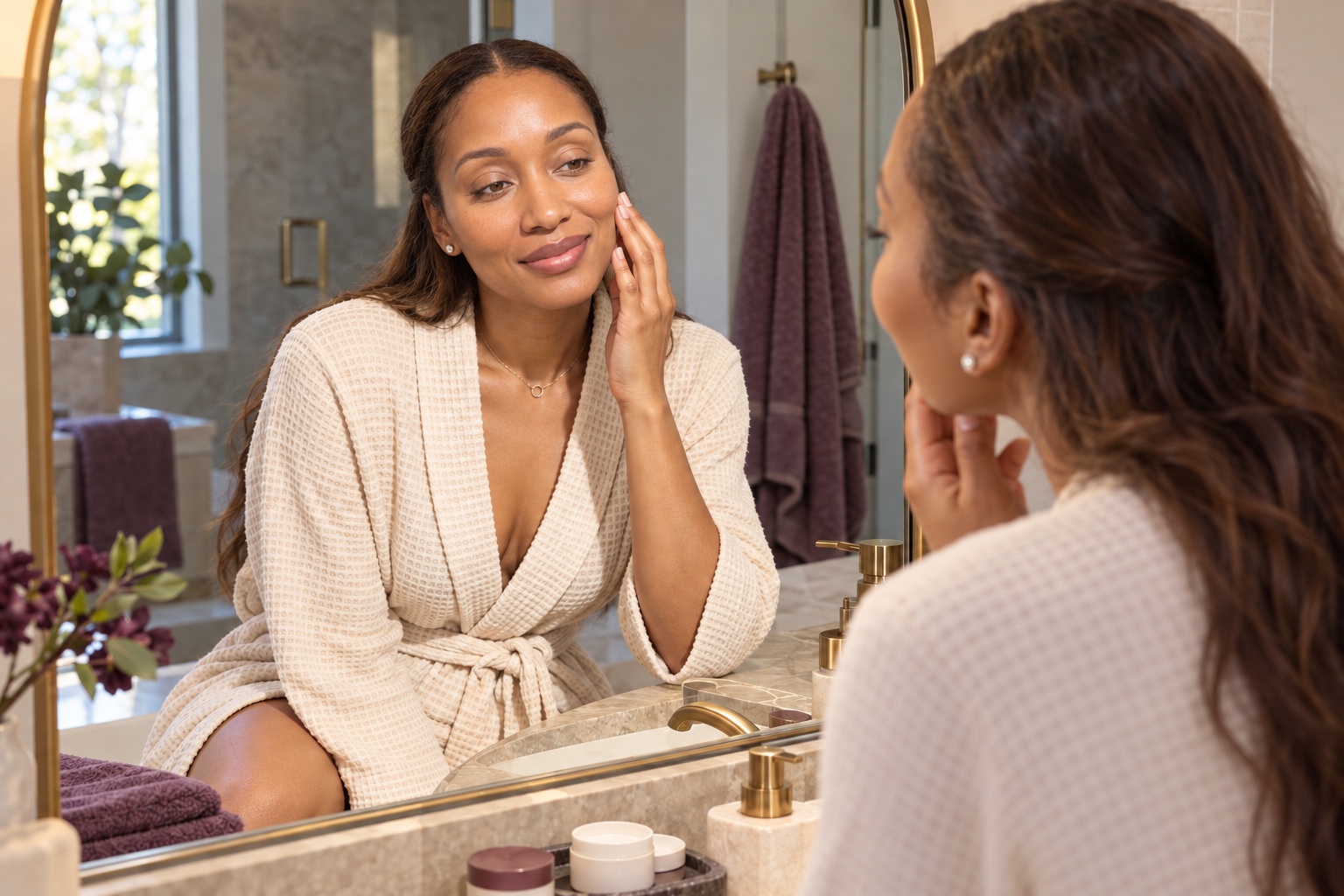

For me, one of the first signs of perimenopause showed up on my face. My skin was changing, and I needed to look at more than what I was putting on it.
When we talk about perimenopause, we often start with periods or hot flashes. But skin changes were what first caught my attention. I was dealing with acne and trying to understand why my skin no longer felt as predictable. It was frustrating to be navigating breakouts in my 40s while also trying to make sense of everything else changing in my body.
Looking back, I see those skin changes as my first sign of perimenopause. That is how my experience unfolded; a breakout by itself cannot tell someone whether they are in perimenopause. The American Academy of Dermatology notes that hormonal changes can contribute to adult acne, including around the menopause transition. Products, stress, medications and other factors can contribute too.
Three things became the foundation of how I got my skin feeling more normal again: paying attention to my gut, being consistent with my morning and night routine, and sharing what was changing with my dermatologist.
1. I started paying attention to my gut health
I have talked about “fixing my gut” because my digestion was part of what I was dealing with, too. Bloating and skin concerns were both on my mind. I wanted to pay attention to how I felt overall instead of treating my face as a separate problem.
For me, that meant making gut health part of my everyday routine. Fiber, hydration and the supplements I was taking became things worth paying attention to. I started thinking about what I was eating, how my digestion felt and what I could keep doing consistently.
I want to be careful about what that means. I made several changes, so I cannot isolate gut care as the reason my skin improved. My experience does not prove that a particular food or probiotic treats perimenopausal acne. NIH’s National Center for Complementary and Integrative Health explains that probiotic effects depend on the product and condition, and that much remains uncertain about their use.
If you are dealing with digestive symptoms alongside skin changes, write both down and discuss them with an appropriate healthcare professional. You do not need to assume they have one cause, follow a restrictive “detox,” or copy my supplement routine to start that conversation.
2. I committed to a consistent morning and night routine
Consistency became one of the most useful parts of my approach. I wanted a routine I could actually follow in the morning and at night, rather than a collection of products I used whenever I remembered.
I have shared ingredients such as azelaic acid, salicylic acid and a retinoid in my skin-care content. That does not mean everyone needs all three, or should layer them together. The right combination and frequency depend on your skin, the products and any treatment plan you have.
A practical starting point for a conversation with your dermatologist is a gentle cleanser, moisturizer, daytime sun protection and a clear plan for any treatment. AAD recommends gentle care for acne-prone skin and avoiding harsh scrubbing. Adding more products is not always the answer, especially when skin is irritated.
I also needed to think beyond how my skin looked on one particular morning. A routine gives you something consistent to assess over time. If you are changing everything at once, it becomes harder to understand what your skin tolerates.
3. I shared the changes with my dermatologist
My dermatologist became part of the process. I wanted to share what I was noticing instead of trying to figure out every change alone. Skin symptoms deserve their own assessment, even when you suspect hormones are involved.
There is a difference between saying “my skin is acting up” and explaining where the breakouts are, whether they hurt, how long they have been happening and what you have used. Photos can help document a flare that has settled by the day of an appointment.
You can also mention cycle changes, medications, supplements and new skin or hair products. Those details help your dermatologist evaluate possible contributors and decide what treatment makes sense. Painful, deep or scarring acne is a reason to seek care rather than keep trying products indefinitely.
What I would tell another woman noticing skin changes
You do not have to know whether it is perimenopause before asking for help. You can simply say that your skin has changed and you would like to understand it. For me, taking a more consistent approach and involving my dermatologist helped me feel less like I was guessing.
If you want a clearer record to bring to an appointment, start with these details:
- When you first noticed the change and what feels different from your usual skin.
- Where breakouts appear, whether they are painful, and any lingering marks or scars.
- Photos in similar lighting, without filters, taken at a repeatable interval.
- Your morning and evening products, treatment frequency, medications and supplements.
- Cycle timing or other symptoms you have noticed, without assuming they caused the breakout.
That is one reason I built The Change Notes. I wanted a place to capture changes while they were fresh, so I could bring better notes into the room. You can use the skin-photo journal alongside cycle and symptom entries to document your experience, too.
Keep a record of what your skin is doing.
Add dated skin photos and notes to The Change Notes. Your tracking entries and photos stay in your browser on this device.
Open the free tracker How to Read a Supplement Label After 40
 Is it perimenopause—or is something else going on?