Hormonal Acne After 40: What to Track During Perimenopause
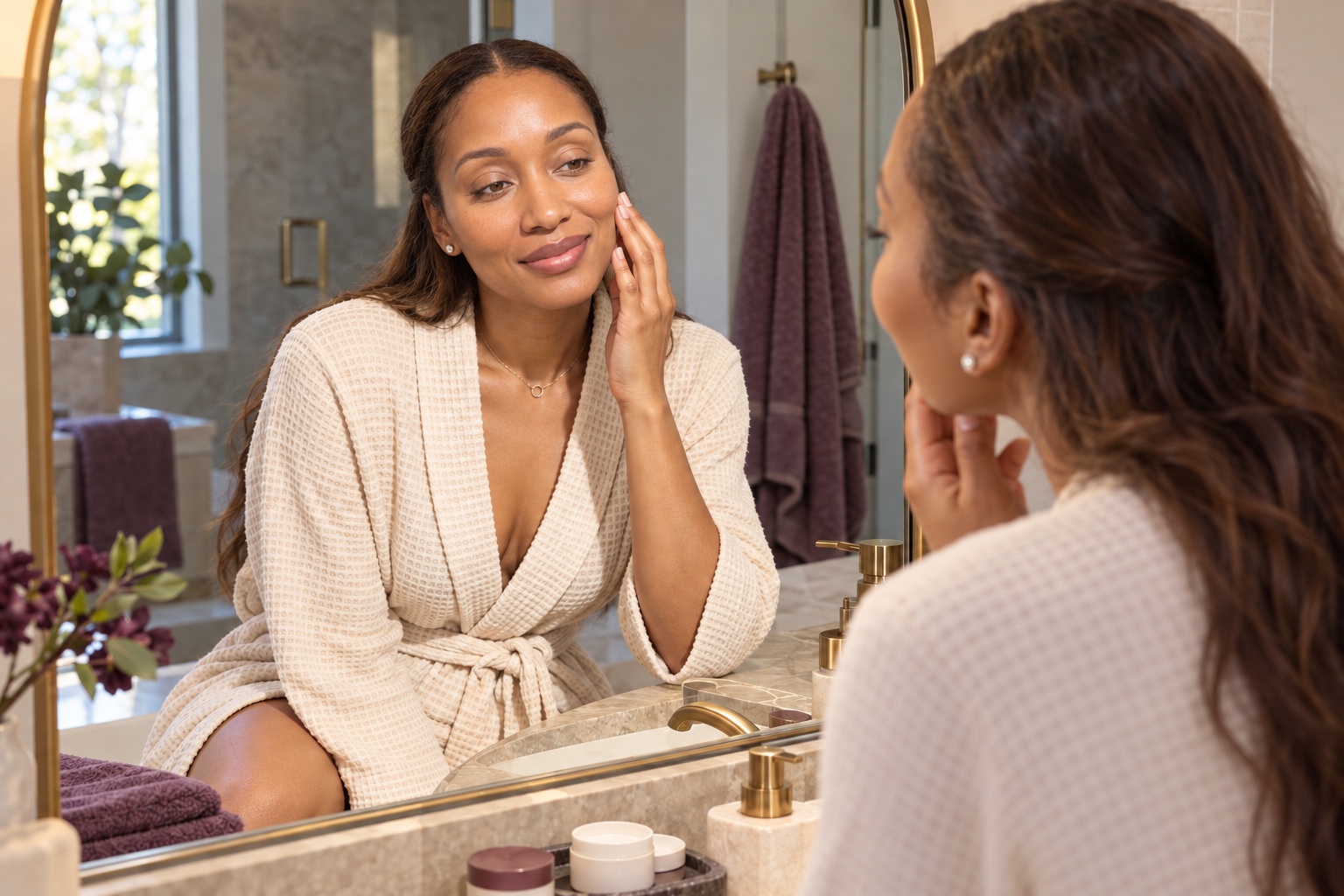

Breakouts in your 40s can feel especially frustrating when your skin is also becoming drier or more sensitive. A photo timeline can show changes that memory misses.
Do not assume every breakout has one cause
Hormonal shifts can influence adult acne, but skin-care products, friction, stress, medications and other health factors may also play a role. The location alone cannot diagnose “hormonal acne.”
A dermatologist can evaluate the type of acne, severity, scarring risk and treatment options. That matters because inflamed nodules and cysts may need a different plan than clogged pores or occasional pimples.
What to record
- Where the breakout appears and whether it is painful
- The number and type of lesions, if you can describe them
- Cycle timing and other symptoms
- New skin, hair or makeup products
- Prescription, hormone or supplement changes
- Treatments used and how consistently you used them
Use photos consistently
Take photos in similar lighting, from similar angles and without a filter. Compare changes over weeks, not hours. A photo journal documents appearance; it cannot determine the cause or replace an examination.
Look for a pattern across weeks
One photo taken during a particularly bad breakout can make the problem look constant. Date each image, then compare several weeks. Note whether breakouts cluster around certain cycle days, follow a new product or show up in areas exposed to hair products or friction. A pattern is a clue for a dermatologist, not proof that hormones are the only cause.
Describe what you see and feel: small clogged bumps, inflamed spots, deep painful lesions, lingering dark marks or new scars. Pain, scarring and persistent dark marks matter, especially if your skin tone makes discoloration last longer than the blemish itself. Mention them when you seek care rather than waiting for a severe breakout.
Keep the routine record simple
List your cleanser, moisturizer, sunscreen and any active treatments, along with how often you actually use them. If you start several products at once, it becomes harder to interpret a change. Ask a dermatologist or other qualified clinician before starting prescription or hormonal treatments, particularly if pregnancy is possible or you have a relevant medical condition.
A photo check-in that is easier to compare
- Use the same room, lighting and camera angle when you can.
- Take a front view and any side view that captures a recurring area.
- Skip beauty filters and note when makeup or a spot treatment is visible.
- Compare photos at a similar interval, such as every two weeks.
The American Academy of Dermatology notes that adult acne has several possible contributors and can be treated. If acne is deep, painful, scarring or persistent, a dermatologist can assess what kind of breakout you have and discuss a plan that fits your skin.
Build a skin timeline you can explain
Pair a photo with the date, area of concern, products used and any recent change in routine or treatment. Use similar lighting and distance so differences are easier to describe. Do not treat the photo itself as proof of a hormonal cause.
If the cause is unclear, leave it unclear in your note and bring the timeline to a dermatologist. Use the daily tracking routine to keep the record manageable, and include a treatment list from the supplement-label guide.
Build a visual skin timeline.
Save private skin photos with dates, cycle notes and product context inside your browser.
Open the skin journal → How to Track Perimenopause Symptoms: A Simple Daily Routine
 How to Read a Supplement Label After 40