How to Read a Supplement Label After 40
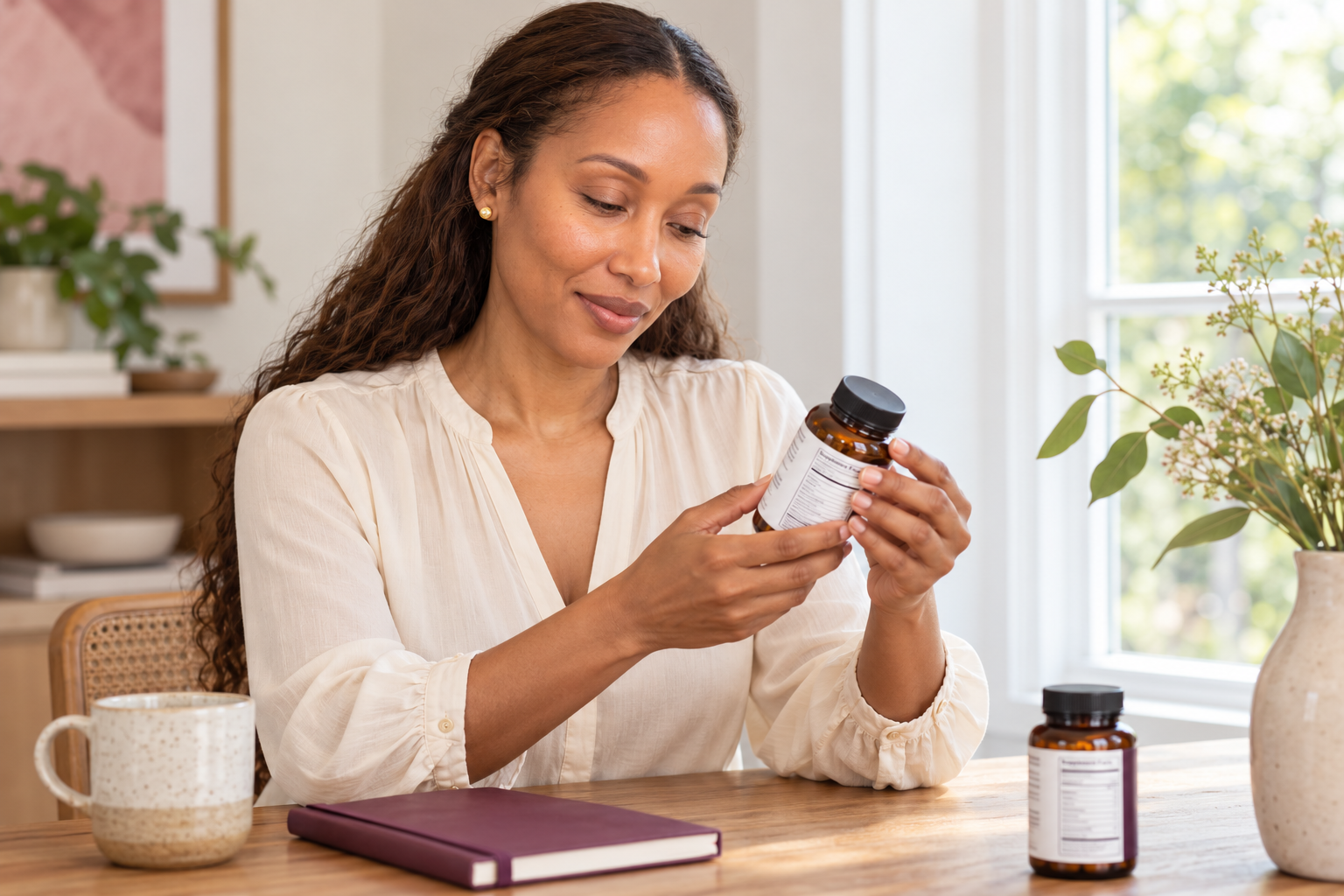

The front of a bottle tells you what a product wants you to notice. The Supplement Facts panel helps you understand what you are actually taking—and what to ask before adding it to your routine.
Start with your question
Before comparing bottles, write down what you want help with. “I wake during the night,” “I want to discuss my nutrition,” and “I am concerned about a deficiency” are different questions. Naming the question makes it easier to ask whether a product has relevant evidence and whether something else needs evaluation.
A phrase such as “hormone support” is too broad to tell you whether a product is appropriate for your situation. NCCIH explains that evidence varies widely across supplements and that products sold to consumers can differ from those tested in research. [1]
1. Read the serving size first
The Supplement Facts panel lists active ingredients and amounts per serving. A serving may contain multiple capsules or gummies. The manufacturer suggests a serving size, but your healthcare professional may recommend something different. [2]
When making your own record, keep two separate details: what the label says and what you actually take. “Two capsules per serving; I take one capsule each morning” is clearer than writing only the large number from the front of the bottle.
2. Record the ingredient names and amounts
Write the full product name, ingredient amounts, units and form as printed. If a label names a specific form, preserve that detail. A clear photograph of the facts panel and directions can save you from trying to recall the wording later.
Do not assume a daily-value percentage tells you what you personally need. NIH notes that daily values are label reference amounts; they are not individualized recommended intakes. [3]
3. Put every product on one list
Include your multivitamin, powders, sleep products, beauty supplements and occasional products. Check whether the same ingredients appear more than once. NIH warns that combining supplements or taking high doses can increase the risk of unwanted effects. [2]
For a review appointment, bring the actual bottles or readable label photos. If you cannot identify an ingredient or its amount, write “unclear” rather than guessing. Add prescription and over-the-counter medicines to the list you share with your clinician or pharmacist.
4. Check safety before judging the promise
Supplements can interact with medicines, affect surgery or pose risks with some medical conditions. “Natural” does not guarantee safety. FDA generally does not review dietary supplements for safety and effectiveness before marketing. [1]
Independent quality testing can offer information about a product’s contents. NIH explains that quality seals do not establish that a supplement is safe or effective for you. [2]
Use this review checklist
- What am I trying to address, and does it need an assessment first?
- What evidence supports this exact ingredient for that purpose?
- Does it overlap with anything I already take?
- Could it interact with my medicines or matter for my health history?
- If it is appropriate, what amount, duration and follow-up should we agree on?
After a review, record any agreed change and its date. Note what happened afterward without treating improvement as proof that the supplement caused it. Keep the list current so the next conversation starts with what you are actually using.
Start with one honest note.
Record what you notice in The Change Notes, then bring the details and your questions to your healthcare professional.
Open the free tracker →Source links checked October 5, 2026.
 How to bring better perimenopause notes to your doctor
 Hormonal acne after 40: what should you track?